
Online Passport Registration
ऑनलाइन पंजीकरण
(Private Consultancy Service Provider)
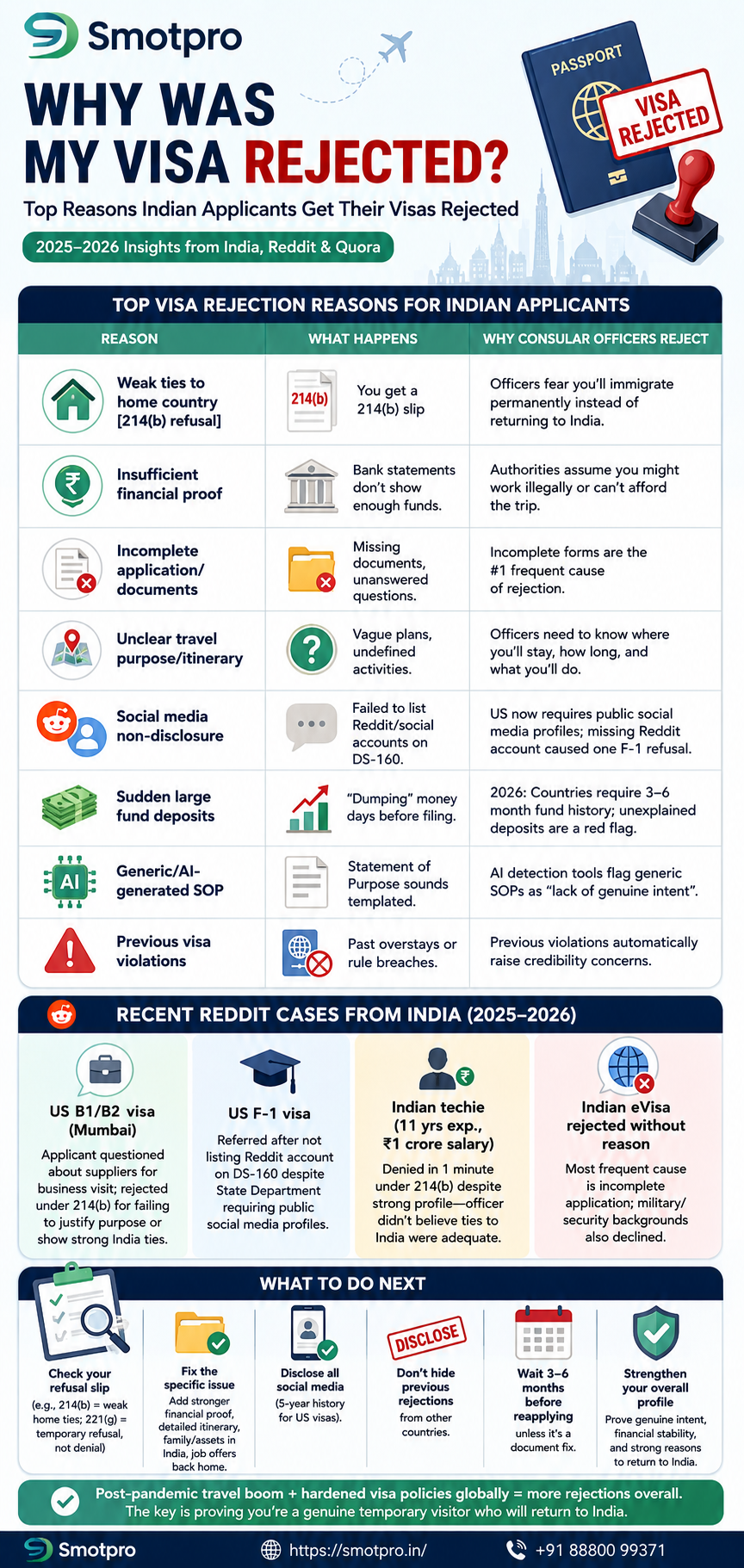
Visa rejection can be frustrating, costly, and disappointing, especially after investing time, money, and effort into preparing your application. Whether you are applying for a tourist visa, business visa, work visa, student visa, or family visit visa, understanding the reasons behind a refusal is essential before submitting a new application.
With immigration authorities worldwide becoming stricter and more focused on applicant credibility, visa approvals now depend heavily on documentation accuracy, financial stability, travel intent, and overall profile strength. Understanding why visas are rejected can significantly improve your chances of success in future applications.
A visa rejection occurs when a consular officer or immigration authority determines that an applicant does not meet the eligibility requirements for the requested visa category. The rejection does not always mean a permanent ban. In many cases, applicants can reapply after correcting the issues identified during the previous application.
Different countries have different refusal codes and procedures. For example, the United States often uses Section 214(b) refusals for applicants who fail to demonstrate strong ties to their home country, while other countries may reject applications due to documentation, financial, or credibility concerns.
One of the leading reasons for visa rejection is the inability to prove strong ties to the applicant's home country.
Visa officers want assurance that travelers will return after their authorized stay. Strong ties may include:
When applicants fail to demonstrate sufficient reasons to return home, authorities may suspect potential immigration intent and reject the application.
Financial capability is a critical factor in visa decisions.
Applicants must demonstrate that they can comfortably afford:
Common financial mistakes include:
Immigration authorities need confidence that travelers will not face financial difficulties or seek unauthorized employment during their stay.
Missing or incorrect documents remain one of the most frequent reasons for visa refusals.
Common documentation issues include:
Even minor mistakes can lead to significant delays or outright refusals.
Unclear Travel Plans
Visa officers evaluate whether the stated purpose of travel matches the provided evidence.
Applicants should clearly explain:
Vague travel plans often create doubts about the applicant's genuine intentions.
Poorly Prepared Itinerary
A detailed itinerary strengthens credibility.
A strong itinerary typically includes:
The more organized and transparent the travel plan, the stronger the application becomes.
Sudden Large Deposits
Many countries now review financial history over several months rather than relying solely on the current account balance.
Large unexplained deposits shortly before submission can trigger concerns.
Immigration officers may question:
Applicants should maintain consistent financial records and be prepared to explain any significant transactions.
Insufficient Financial History
A healthy financial profile demonstrates long-term stability.
Authorities often examine:
Stable finances over time create a more convincing application.
Generic Statement of Purpose (SOP)
The Statement of Purpose plays a major role in student visa applications.
Many rejections occur because applicants submit:
A successful SOP should clearly explain:
Questionable Study Intent
Visa officers assess whether applicants genuinely intend to study.
Concerns may arise when:
Strong academic planning significantly improves approval chances.
Previous Immigration Violations
Past immigration issues can negatively affect future visa applications.
Common concerns include:
Immigration systems increasingly share information across countries, making transparency extremely important.
Applicants should always disclose previous refusals and violations honestly.
Social Media and Digital Background Checks
Many countries now evaluate applicants beyond traditional documents.
Authorities may review:
Failure to disclose required social media information can create credibility concerns and may result in additional scrutiny.
Applicants should ensure all information provided during the application process is accurate, complete, and consistent.
Weak Employment Evidence
Employment documentation should clearly establish:
Weak employment evidence may lead officers to question the applicant's economic ties.
Inconsistent Work History
Discrepancies between:
can significantly damage credibility and increase rejection risk.
Business travelers must clearly justify the purpose of their visit.
Common reasons for refusal include:
Business visa applicants should provide comprehensive supporting evidence that demonstrates the necessity of travel.
Tourist visas are among the most commonly applied visa categories worldwide.
Frequent reasons for rejection include:
A well-prepared tourist visa application demonstrates genuine tourism intentions and strong home-country connections.
Double-check every document before submission.
Create a checklist covering:
Provide:
The stronger the financial profile, the lower the perceived risk.
Show evidence of:
These factors reassure authorities that you intend to return after your trip.
Never provide misleading information.
Inconsistencies between documents, interviews, and online profiles often result in refusal.
Transparency builds trust and strengthens credibility.
For countries requiring interviews, applicants should be prepared to discuss:
Confident and truthful responses can significantly improve approval outcomes.
Yes, but only after identifying and correcting the specific reason for refusal.
Before reapplying:
Submitting the same application without meaningful improvements often results in another refusal.
Final Thoughts
Visa rejection is not the end of your travel, study, work, or business plans. Most refusals occur because immigration authorities require stronger evidence regarding finances, travel intent, documentation, employment stability, or home-country ties. By understanding the reasons behind visa refusals and addressing weaknesses before reapplying, applicants can significantly improve their chances of obtaining approval.
Careful preparation, accurate documentation, financial transparency, and a clear purpose of travel remain the foundation of a successful visa application in today's increasingly rigorous immigration environment.
At SmotPro, we specialize in providing reliable, fast, and professional passport and visa assistance for travelers across India. Our experienced team offers dedicated support for tourist visas, business visas, work visas, study visas, family visit visas, and passport services. With a customer-focused approach and expert guidance, we help applicants navigate complex documentation requirements, application procedures, and embassy processes with confidence. Our professionals work tirelessly to ensure every application is prepared accurately and efficiently. With 24x7 support, fast processing assistance, and a commitment to service excellence, SmotPro has helped more than 100,000 customers successfully obtain their travel documents. Whether you are applying for a new passport, renewing an existing passport, or seeking assistance for international visa applications, our expert team is ready to help. We are committed to delivering dependable, dedicated, and professional support at every stage of your journey, making international travel, education, employment, and business opportunities more accessible and stress-free.
Our Passport offices : Delhi, Mumbai, Pune, Chennai, Bangalore, Vizag, and Hyderabad